Case study · Private investment

From four hours of daily research to under two minutes.

A private investor's proprietary methodology now runs through an AI decision-support system that applies her rules across approximately 300 securities, using her source standards and validation requirements.

4 hours → <2 minutes Daily research and screening time
~300 securities Evaluated under the same methodology
0 partial rankings Incomplete inputs produce no report

The method worked. Applying it manually did not scale.

The investor had more than 15 years of market experience and a defined methodology. The constraint was the daily work required to apply it with full discipline.

Research meant crossing several trusted data sources, checking each candidate against a sequence of criteria, monitoring existing positions, and keeping track of conditions that changed what deserved attention. The work took up to four hours a day and limited how much of the market could be reviewed consistently.

The goal was not to ask AI what to buy. It was to make the investor's own method explicit, apply it repeatedly, and surface the information she needed while keeping every investment decision in her hands.

Before

Manual multi-source research, a narrow review window, and hours spent checking whether each security met the investor's criteria.

Required standard

The same rules, source requirements, limits, and exceptions applied across the full target universe without silent substitutions or omissions.
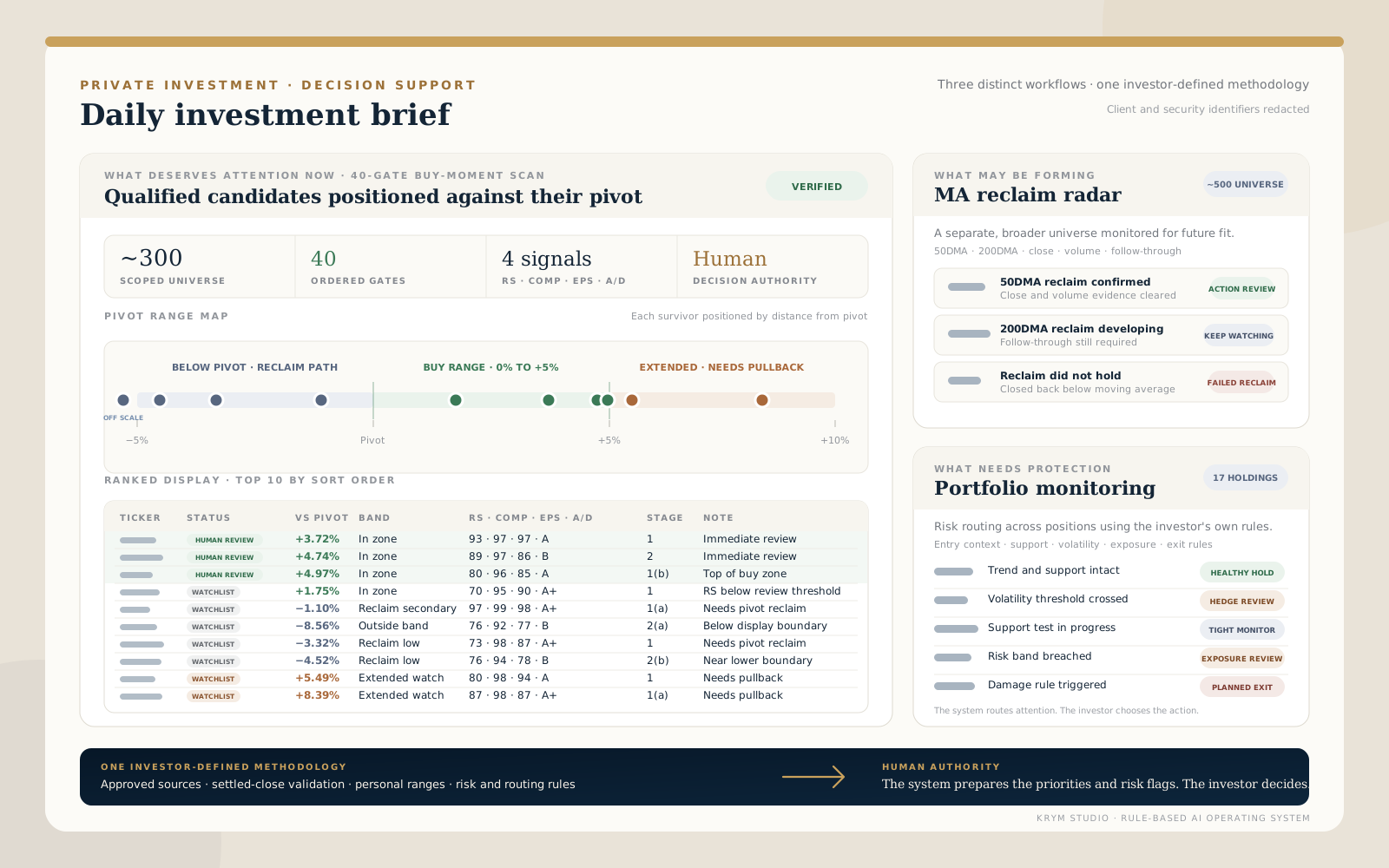
A decision-support system built around her operating method.

I extracted the methodology from the investor's existing work and structured it into rules, source priorities, validation gates, exception handling, and standardized outputs.

The build coordinates three separate workflows. Each has its own rules and output, but all three use the same operating standard. The investor's existing market-data tools remain the source of facts. The AI system applies her logic to those inputs and prepares the result for review.

The intelligence sits in the rules the model must follow.

The system is valuable because it follows the discipline already governing the investor's work. AI is allowed to reason over verified inputs. It is not allowed to supply facts, fill gaps, change the methodology, or make the final decision.

Source hierarchy

Defines which sources can provide each input, which source takes priority, and which sources are not accepted.

Ordered rules and limits

Each security moves through the investor's qualification logic in the required sequence.

Validation gates

Required data must be current, complete, and verified before classification begins.

Exception handling

Missing or conflicting inputs trigger a defined stop, disclosure, and retry path.

Standardized outputs

Every run returns the same structure, status language, and level of explanation.

Human authority

The investor reviews the evidence and retains responsibility for every investment decision.

Ninety-nine percent verified still produces no ranking.

If one required closing price cannot be verified, the system refuses to silently exclude it, substitute another value, or rank the remainder. It marks the run undeliverable, identifies the missing dependency, and tries again later. A complete report may arrive late. It does not arrive partially correct.

Reliability came from testing the failures.

The system was calibrated on real runs, not approved after one successful demonstration.

Early runs exposed the shortcuts a general-purpose AI tends to take: using a provisional value, producing a partial ranking, dropping an unresolved security, or reaching for an alternative source without approval. Each rejected workaround became part of the operating rules.

The logic was then tested against the same source data in separate model and execution environments. Corrections continued until identical inputs produced the same classifications and outputs consistently. That process is what turned a plausible workflow into a dependable operating system.

More coverage. Less research labor. The same decision authority.

The investor now starts with structured research already prepared under her methodology. Time once spent rebuilding the analysis can be used to review what surfaced, examine exceptions, and make the decisions that still require her judgment.

Under two minutes

for a daily process that previously took up to four hours.

Approximately 300

securities evaluated under the same defined standard.

One methodology

applied across research, alerts, and portfolio monitoring.

This is not an AI stock picker or trading bot.

The system does not predict performance, place trades, or replace the investor's judgment.

It structures the research layer around a proprietary method. It applies known rules to approved data, surfaces what deserves review, explains why it surfaced, and stops when the evidence does not meet the required standard.

The system prepares the decision. It does not own it.

That authority boundary is part of the architecture, not a disclaimer added after the build.

How this kind of implementation works.

Does the system make investment decisions?

No. It applies the investor's rules to verified inputs, surfaces candidates and flags, and prepares standardized research. The investor retains every investment decision.

Does it replace the investor's market-data tools?

No. Those tools remain the source of market data and technical context. The system coordinates the investor's rules across those inputs and produces the custom research output her process requires.

What happens when required data is missing?

The system refuses to produce a partial ranking. It identifies the missing dependency, marks the run undeliverable, and retries later instead of silently omitting, substituting, or inventing data.

Can the same method be used outside investment work?

Yes. The specific investment rules remain proprietary, but the implementation method transfers to other recurring work built on trusted sources, explicit rules, exceptions, validation standards, and human decision boundaries.

What expert work is still handled manually?

If a valuable workflow depends on proprietary knowledge, strict rules, or expert judgment, I can assess what should be structured and build the system around it.

Discuss an implementation